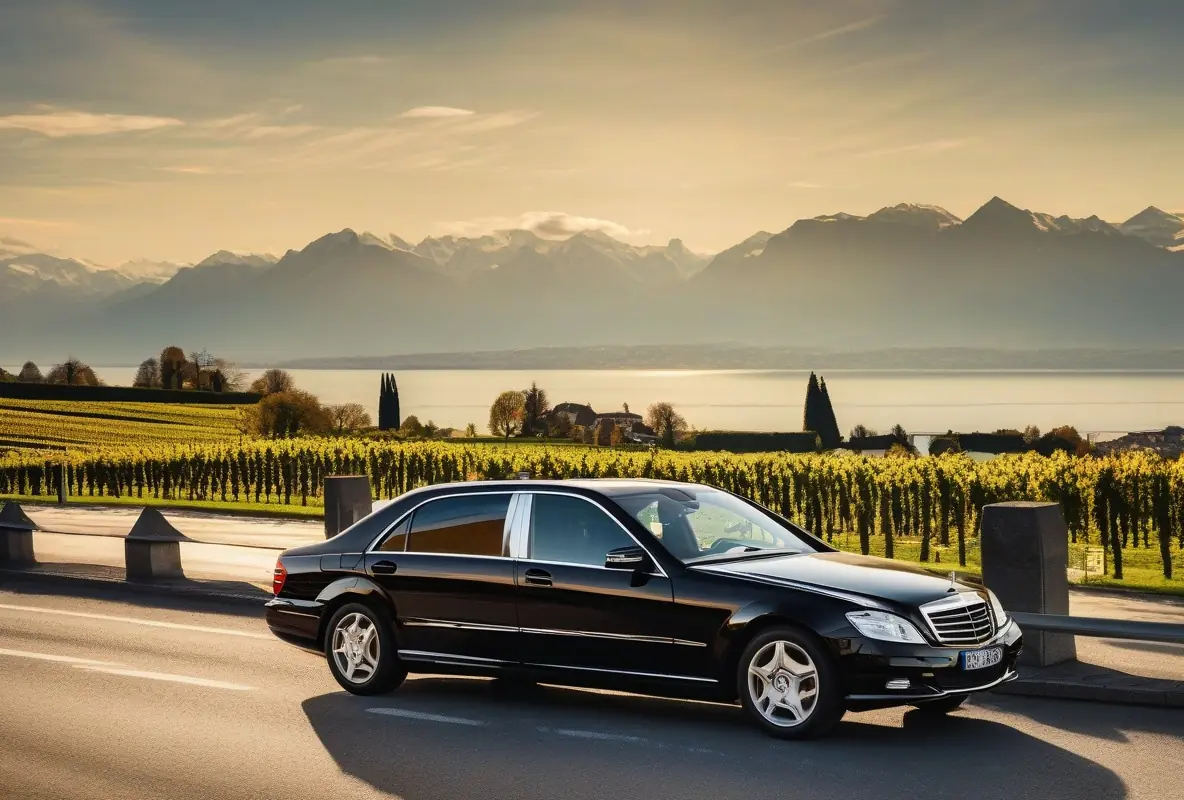
Lake Lucerne, known in German as the Vierwaldstättersee — the lake of the four forest cantons — is the geographic and historical heart of Switzerland. It is the fourth-largest Swiss lake by surface area but the most dramatic in form: a fjord-like geography of long arms reaching deep into the mountain ranges of Lucerne, Schwyz, Uri, Nidwalden and Obwalden. The four forest cantons that ring the lake are the founding territories of the Swiss Confederation, sworn together on the Rütli meadow in 1291. The history is not symbolic; it is physically present at every viewpoint.
A private limousine tour is the most comfortable way to experience the region. The roads that follow the lake are narrow and switchback in places, the mountain railways are well integrated with road approaches, and the most interesting villages are spaced for a daily rhythm that combines driving, walking and a meal. This guide outlines the classic itinerary, the major mountain options, the paddle-steamer integration, and how to combine these elements into a day, a long weekend or a custom multi-day programme.
01The Classic Day-Tour Route
The traditional Lake Lucerne tour begins in Lucerne and follows the lake's northern shore eastward to Küssnacht, where the Hohle Gasse — the narrow road where William Tell, according to legend, ambushed the Habsburg bailiff Gessler — is a brief but historically anchoring stop. From Küssnacht the route continues to Brunnen, around thirty minutes from Lucerne, where the lake widens into one of its most photographed panoramas.
From Brunnen, the road crosses to Sisikon and the Tellskapelle — the chapel marking the site where, in the same legend cycle, Tell leapt from the boat carrying him to imprisonment. Beyond Sisikon, the route reaches Flüelen at the southern end of the lake, fifty minutes from Lucerne, where the Reuss valley opens towards the Gotthard.
The return journey can mirror the outbound route, or — for a different experience — combine a paddle-steamer crossing with the chauffeur meeting the guests at a designated pier. Both options finish in Lucerne in time for an evening in the old town.
02Bürgenstock Resort — What Makes It Special
The Bürgenstock ridge rises directly from the lake to 1,128 metres, a wall of rock topped by one of Europe's most distinctive resort complexes. The drive up the Bürgenstockstrasse from Stansstad takes approximately thirty minutes from Lucerne and climbs through a series of switchbacks with progressive views over the lake. The Bürgenstock has been a destination resort since the late nineteenth century; in the mid-twentieth century, Audrey Hepburn lived in nearby Tolochenaz and Sophia Loren spent extended summers in the village of Bürgenstock.
The Hammetschwand outdoor lift, opened in 1905 and renovated in subsequent decades, climbs 153 metres up the cliff face and remains the highest exterior lift in Europe. The view from the upper platform reaches across the lake to Pilatus, Rigi and the deeper Alps. Restaurants at the Bürgenstock include Spices, RitzCoffier, and the more recent Verbena, each programmed to a different occasion across the resort's daily rhythm.
The modern Bürgenstock Resort, relaunched in 2017 after a multi-year reconstruction, brought the complex into the current generation of European luxury resorts: a multi-hotel campus with a spa, conference facilities, multiple dining rooms and the original 1873 Palace Hotel as the centrepiece. For chauffeur guests, the resort is a natural pause on a Lake Lucerne tour — a two-hour lunch, an afternoon at the spa or a full overnight all integrate cleanly.
03Pilatus — Switzerland's Dragon Mountain
Pilatus, the 2,128-metre massif south-west of Lucerne, is approached by two routes that complement each other. The valley station at Alpnachstad hosts the Pilatus cogwheel railway, with a maximum gradient of 48 per cent — the steepest cogwheel railway in the world. The ascent takes thirty minutes and passes through landscape unreachable by any other means. From the summit, on a clear day, the view encompasses 73 Alpine peaks.
The alternative approach is the cable car from Kriens, called the Dragon Ride, which climbs in stages via the Fräkmüntegg intermediate station. Many visitors combine the two — cogwheel up from Alpnachstad, cable car down to Kriens, with the chauffeur collecting at the lower station — to see the mountain from both sides. Lunch at the summit hotel Pilatus-Kulm is a comfortable break before descent; the hotel has been receiving guests since 1890.
For families and groups, the chauffeur drops at the valley station, parks below and meets the group at the agreed return time. For tighter schedules, the chauffeur can confirm the return train timing and adjust the meeting point at the lower terminus on the day.
04Rigi — Queen of Mountains
Rigi rises north of the lake, between the Lake of Lucerne and the Lake of Zug. Its summit at 1,798 metres is reachable by two cogwheel routes — from Vitznau on the lakeshore and from Arth-Goldau on the Schwyz side — and by cable car from Weggis. The Rigi cogwheel from Vitznau, opened in 1871, was the first mountain railway in Europe. Mark Twain hiked Rigi in 1878 and devoted a chapter of A Tramp Abroad to the experience; the mountain remains a touchstone of European mountain tourism.
Rigi's character is distinct from Pilatus: gentler terrain, broader summit plateau, network of well-maintained hiking trails accessible to casual walkers. The Rigi Kulm Hotel sits near the summit and serves as a meal stop; the Mineralbad at Rigi Kaltbad halfway up offers a thermal bath with a panoramic outdoor pool. For chauffeur guests, the Vitznau valley station is the standard starting point, with the chauffeur waiting at the lakeside while the group rides up; the alternative is to start at Arth-Goldau and exit at Vitznau, with the chauffeur transferring between stations during the climb.
05Combining Road with Paddle Steamer
The Lake Lucerne Navigation Company, known by its Swiss-German initialism SGV, operates five historic paddle steamers — Schiller, Stadt Luzern, Gallia, Uri and Unterwalden — which together form the largest paddle-steamer fleet on any Swiss lake. The boats run regular schedules between Lucerne and Flüelen via Vitznau, Brunnen, Gersau and Treib, with timetable variations across the May-to-October navigation season.
A tour that combines road and water makes the most efficient use of the lake's geography. A typical pairing has the chauffeur drive the guest to Vitznau or Brunnen in the morning, the guest takes a steamer onward to Flüelen, and the chauffeur meets the boat at the destination pier for the return journey. The water section delivers views — particularly along the Urnersee arm — that are accessible only from the lake, while the road segment compresses the long, slow stretches that a paddle steamer takes hours to cover.
06Cultural and Culinary Stops
The region around Lake Lucerne supports an unusually dense network of artisanal food producers. The Käserei Schwand near Stansstad produces traditional Innerschweiz cheeses and offers tastings; visitors can watch the cheese-making process during morning hours. The Aeschbach chocolatier at Root operates one of the larger experience-format chocolate factories in the region, with guided tastings and a shop. Kambly biscuits, slightly further into the Emmental at Trubschachen, is a longer detour but a natural pairing for guests with extended programmes.
In Lucerne itself, the old town offers a concentration of restaurants from traditional Innerschweiz cuisine to contemporary fine dining. The Wirtshaus Galliker serves established Lucerne specialities; the Restaurant Balances and the Old Swiss House are long-running classics; the KKL on the lakefront houses contemporary Swiss cooking in a Jean Nouvel-designed setting. The chauffeur on a day tour confirms restaurant reservations in advance and times the routing to the dining schedule.
07Vehicle Recommendations and Luggage Considerations
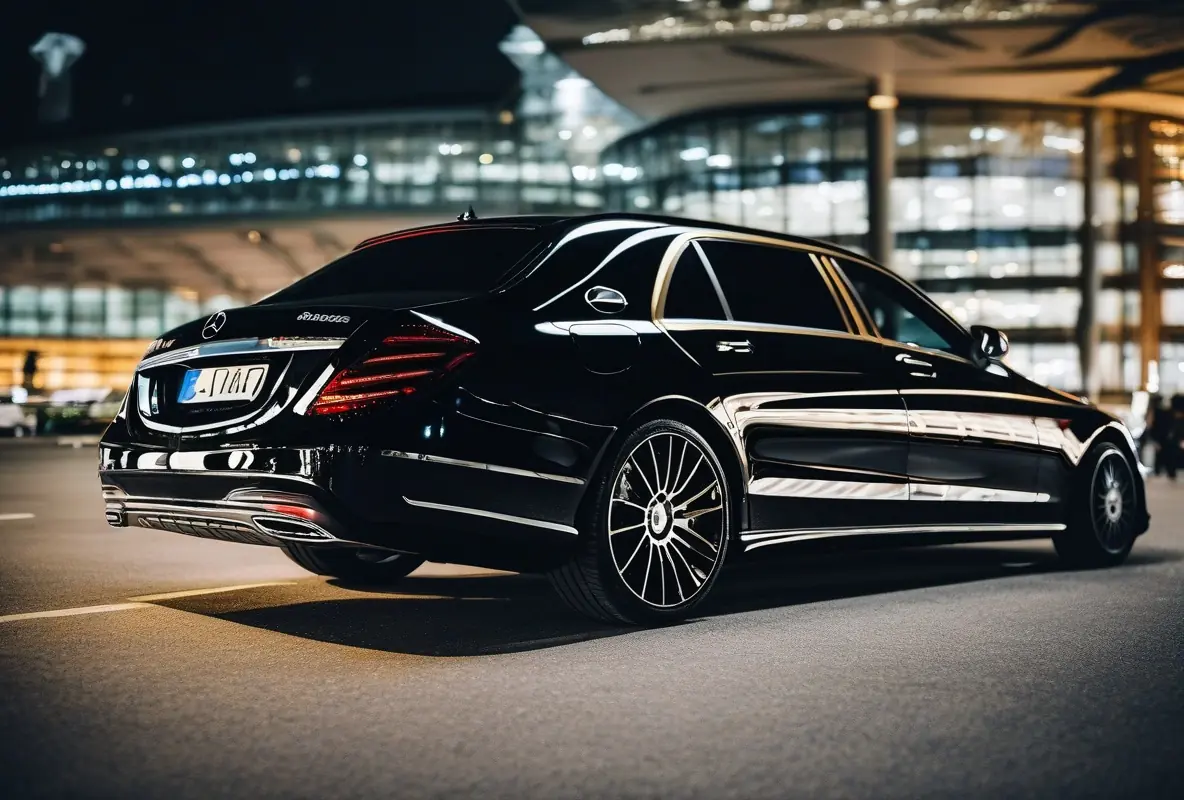
For couples on a one-day Lake Lucerne tour, the Mercedes S-Class is the appropriate vehicle. The quiet cabin lets the guests absorb the landscape; the long wheelbase keeps the ride composed on the lake-road switchbacks; the high-quality glazing provides the visibility that defines the tour's value.
For families and groups of up to seven, the V-Class with the panoramic roof transforms the experience. The opposing leather seats and central table allow conversation and the unrolling map; the roof opens views upwards towards the cliff walls of Bürgenstock or Pilatus that a normal saloon roof would crop. For larger groups — extended families, corporate offsites, multi-generational travel — the Sprinter handles the capacity while remaining comfortable for the day's distances.
For multi-day programmes including overnight at Bürgenstock or in Lucerne, luggage capacity becomes a factor. The V-Class accommodates four adults' weekend luggage with ease; for five or more, the Sprinter is the practical choice.
08Photography and Best Viewpoints
For photographers, the lake rewards specific viewpoint planning. The Bürgenstock terrace at the Hammetschwand upper station gives the canonical panorama across the central lake. The Pilatus summit at sunrise — accessible by overnight at the Pilatus-Kulm hotel — provides the rare experience of the lake below the cloud line. Rigi's western terraces at sunset frame the entire central lake against the Bernese Alps. The small Treib peninsula, reachable only by boat, offers the closest view of the Urnersee's vertical cliff walls.
For casual photography, the chauffeur builds in stops at the established viewpoints along the road: the Axenstrasse pull-outs between Sisikon and Brunnen, the Stoos viewpoint above Schwyz, and the panorama platform at Seelisberg.
09Custom Itineraries
First Limo's Lake Lucerne programmes adapt to the guest's schedule and interests. The half-day tour focuses on Lucerne and a single excursion — typically Pilatus or Rigi — with return in the late afternoon. The full-day tour covers the lake circuit, one mountain ascent and a meal in a chosen location. The two-day programme adds an overnight at Bürgenstock or in a lakeside hotel, allowing the second day to include the paddle-steamer section, an additional mountain, or a cultural pairing with the Engelberg monastery and the Titlis above it.
10Best Season Tips
The paddle-steamer fleet operates from May to October; outside these months, the SGV runs only a limited diesel service. The Pilatus cogwheel railway operates from May to November, with the upper sections closed in winter due to snow. The Rigi cogwheels and cable car operate year-round. For winter visits, the focus shifts to the lake-level villages, the indoor cultural attractions of Lucerne, and the Bürgenstock spa programme. For summer, the full mountain network is open and the days are long enough to accommodate substantial itineraries.
11Combining Lake Lucerne with the Rest of Central Switzerland
For multi-day programmes, Lake Lucerne pairs naturally with neighbouring regions. Engelberg, forty minutes south of Lucerne, hosts the Benedictine monastery dating to the twelfth century and the Mount Titlis cable car system that reaches Switzerland's highest summit accessible by aerial cableway. A day combining Engelberg's monastery in the morning with the Titlis ascent in the afternoon is a natural addition to a Lake Lucerne base.
The Stoos funicular, opened in 2017 and reaching 110 per cent gradient in the central section, is the steepest funicular in the world and accesses the small mountain village of Stoos at 1,300 metres. A day combining the Stoos visit with a paddle-steamer crossing on Lake Lucerne creates one of the region's most distinctive itineraries. The chauffeur drops at the lower station of the funicular at Schwyz and collects at the agreed time after the mountain visit.
For guests interested in chocolate and cheese traditions specifically, the Aeschbach chocolatier at Root combines well with the Käserei Schwand cheese dairy at Stansstad in a half-day food-focused programme. The chauffeur handles the transfers and the parking, allowing the guests to focus on the visits themselves.
12Reserve Your Lake Lucerne Tour
Contact First Limo to plan your private Lake Lucerne tour. We confirm the daily routing in advance, coordinate mountain railway tickets where required, hold restaurant reservations, and assign a chauffeur whose knowledge of the region — its history, its geography, its rhythm — adds an element that no map or itinerary file can supply.